
A Structured Rural Territory Designed for abundance
Granjalotes is a new kind of rural settlement in Paraguay.
A place where private homes are embedded within a larger living landscape — combining agriculture, nature, and village life at a human scale.
Residents own their homes while sharing a continuous productive territory designed for long-term stewardship.
Private lots.
Shared land.
A village designed to grow stronger over time.
TERRITORIAL LOGIC
Territory Before Housing
Most rural projects divide land first and plan later.
Granjalotes reverses that order.
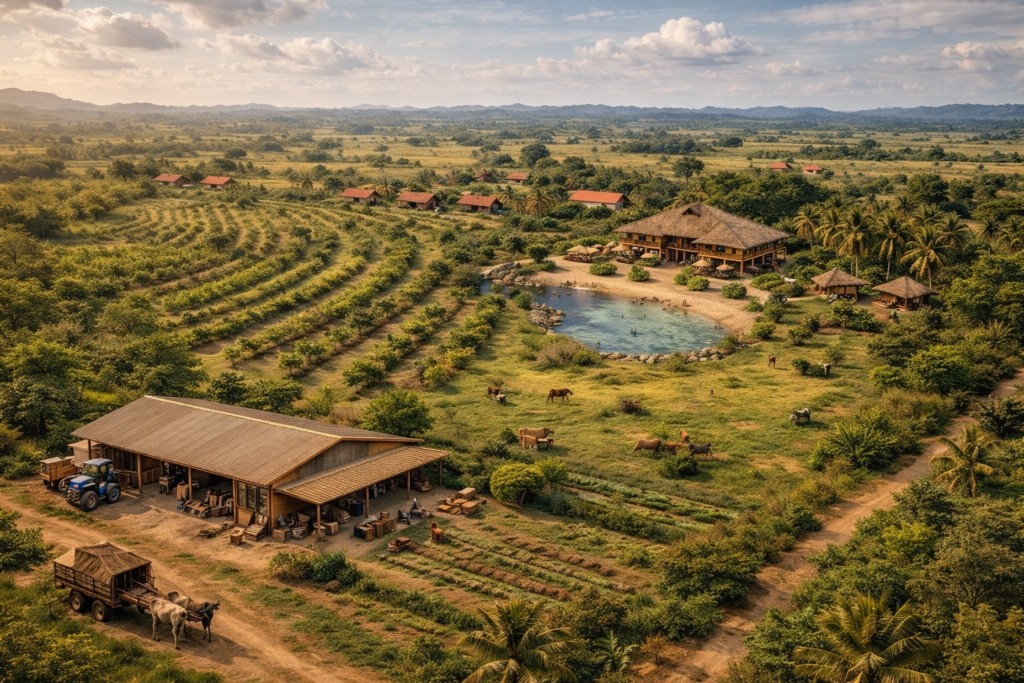
The territory is designed as a continuous whole before lots are allocated.
Water flows are mapped.
Agricultural continuity is defined.
Hubs are positioned.
Access routes are optimized.
Only then are private lots embedded within the larger structure.
The target scale:
• 80+ hectares of continuous land
• Approximately 31–51 households
• Compact private lots (200–800 m²)
• Large shared productive territory
The shared land is not leftover space between houses.
It is the primary long-term asset base of the system.
Continuity strengthens coherence.
Fragmentation weakens it.
DEVELOPMENT STRUCTURE
Developer Initiated — Community Governed
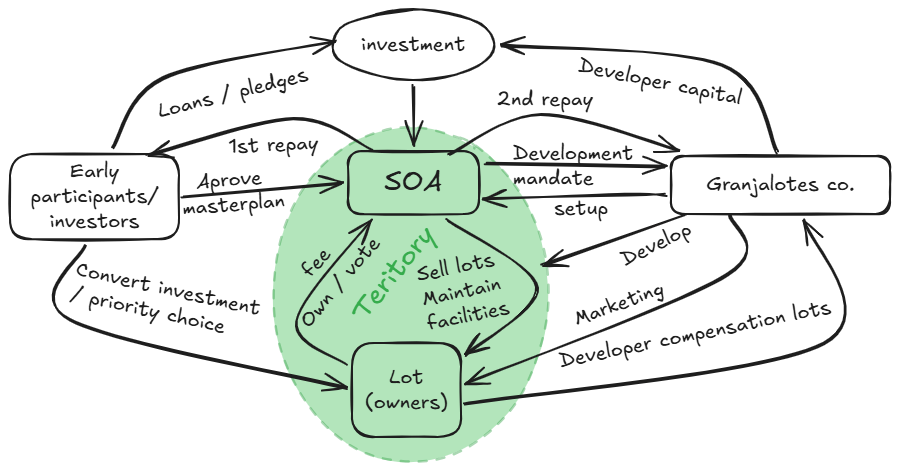
Granjalotes begins with a development phase coordinated by the Granjalotes co. developer.
This phase aligns land acquisition, territorial design, infrastructure sequencing and early capital.
The developer does not own the village.
The territorial structure is held by the Shared Ownership Association (SOA), which becomes the permanent governance body once stabilization criteria are met.
The developer role exists to establish the system — not to control it indefinitely.
Developer authority narrows automatically as the territory stabilizes.
Structure transitions from developer coordination to resident governance.
THE THREE PILLARS
The territory operates on three structural layers — not as themes, but as foundations.
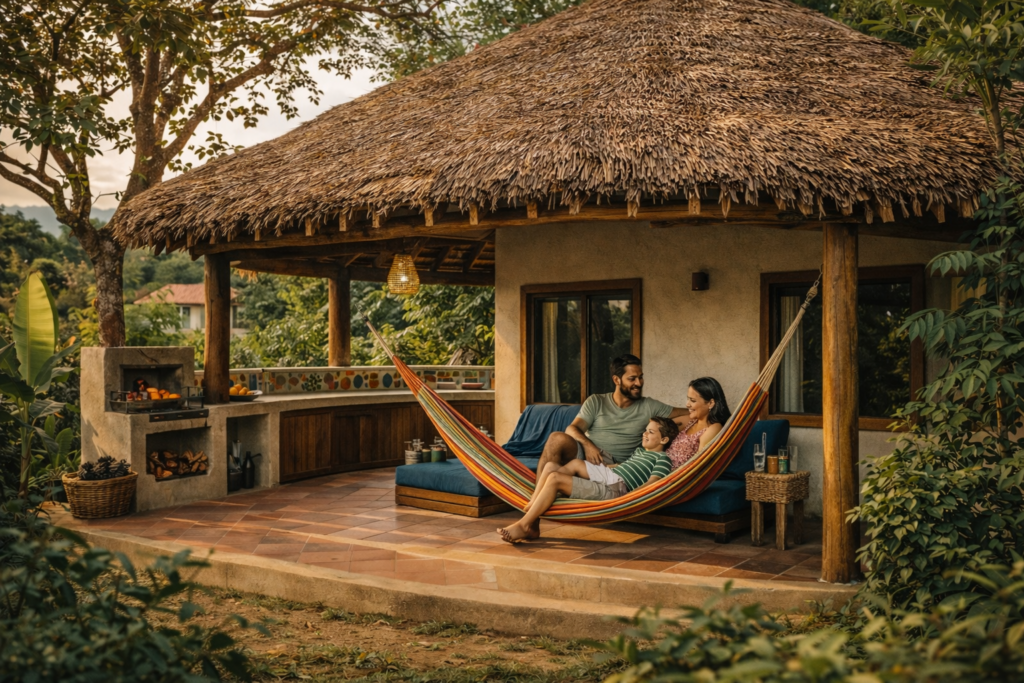
Residential Life — Compact & Intentional
Private homes remain private.
Lots are intentionally compact. This reduces land fragmentation, lowers infrastructure duplication, and preserves large continuous productive areas.
Each household:
• Owns its lot
• Designs within clear building envelopes
• Transfers or inherits freely
• Participates in shared governance
Architectural coherence is encouraged — not imposed.
The goal is not uniformity.
The goal is territorial harmony.
No chaotic sprawl.
No speculative prefab dumping.
No uncontrolled densification.
Shared structure protects the territory — not your living room.
Collective Agriculture — The Productive Backbone
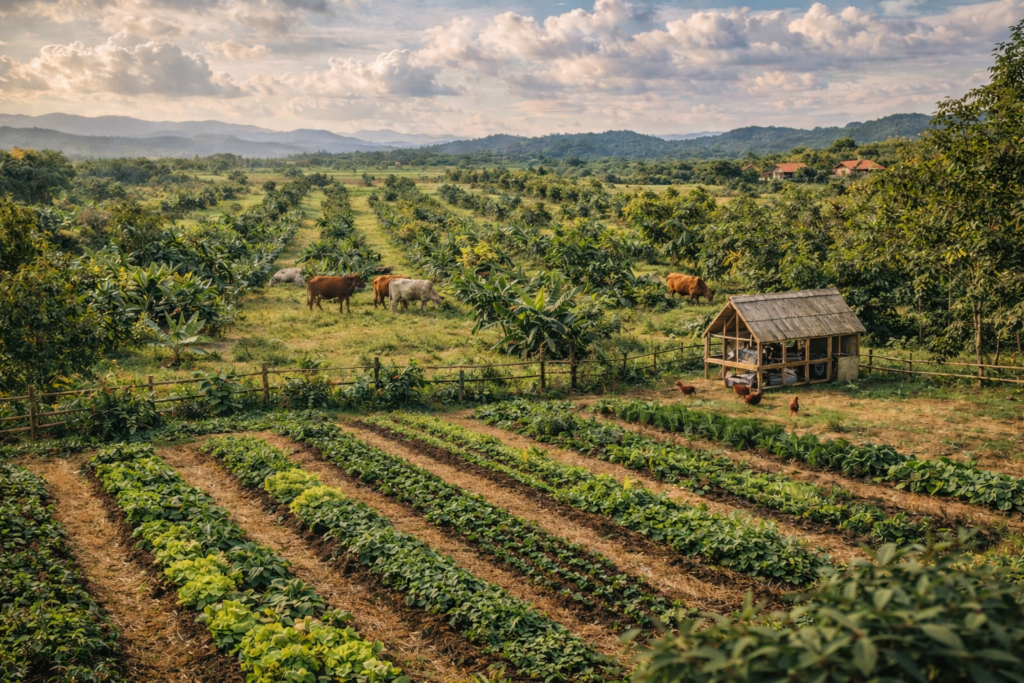
The majority of the land remains continuous and productive.
Agriculture is treated as infrastructure — not decoration.
Depending on operational preference, land may support:
• Rotational grazing
• Orchard systems
• Agroforestry corridors
• Market gardens
• Nursery operations
• Managed timber cycles
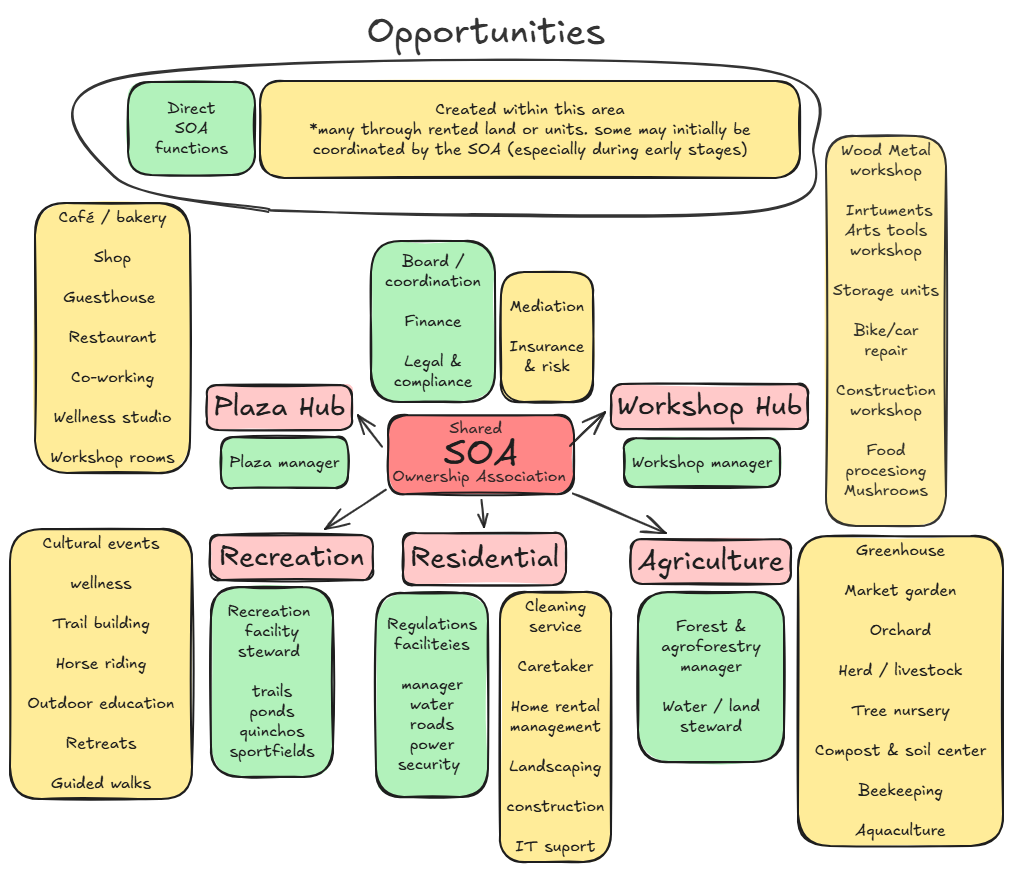
Operational roles may be filled by:
• Internal residents
• Leaseholders
• Professional agricultural operators
The land remains productive even if you never farm a single day.
Continuity preserves viability.
Scale protects resilience.
Without sufficient productive land, a rural project becomes residential clustering.
Granjalotes explicitly avoids that outcome.
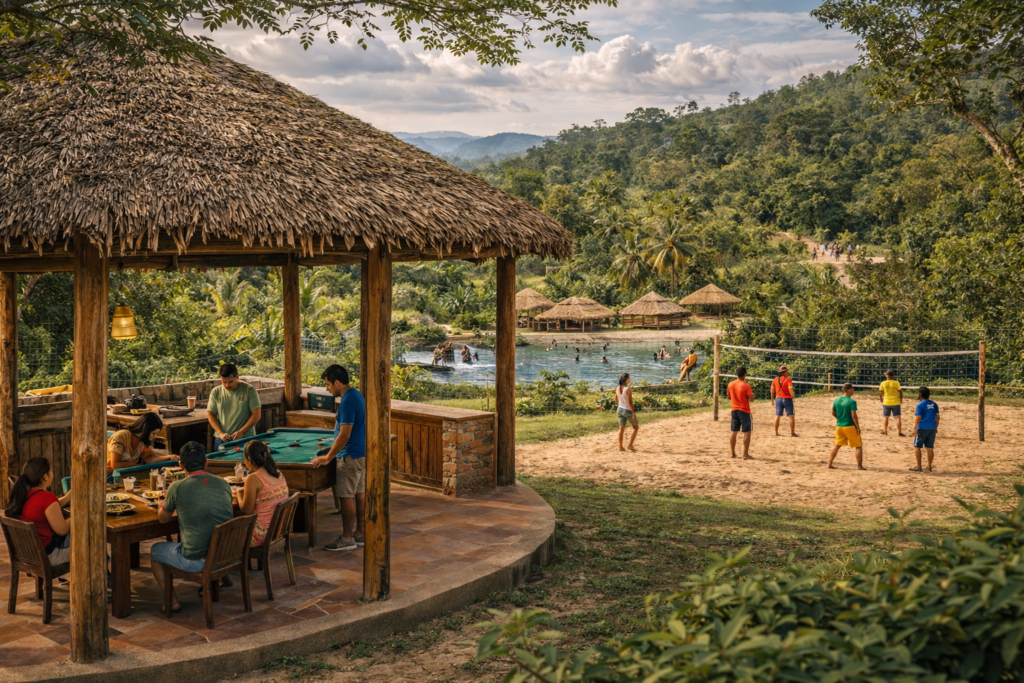
Shared Recreation — Cohesion Without Collectivization
Shared spaces strengthen cohesion — without dissolving autonomy.
Recreational elements may include:
• Natural swimming lake.
• Gathering spaces and quinchos
• Trails and informal sports areas
• Learning or event spaces
Participation is voluntary.
Infrastructure is shared.
Cohesion is encouraged — not imposed.
This is not a collective living experiment.
It is a structured territory where social energy has space to concentrate without overwhelming private life.
THE TWO OPERATIONAL HUBS
Activity is concentrated to prevent territorial friction and to protect residential calm across the territory.
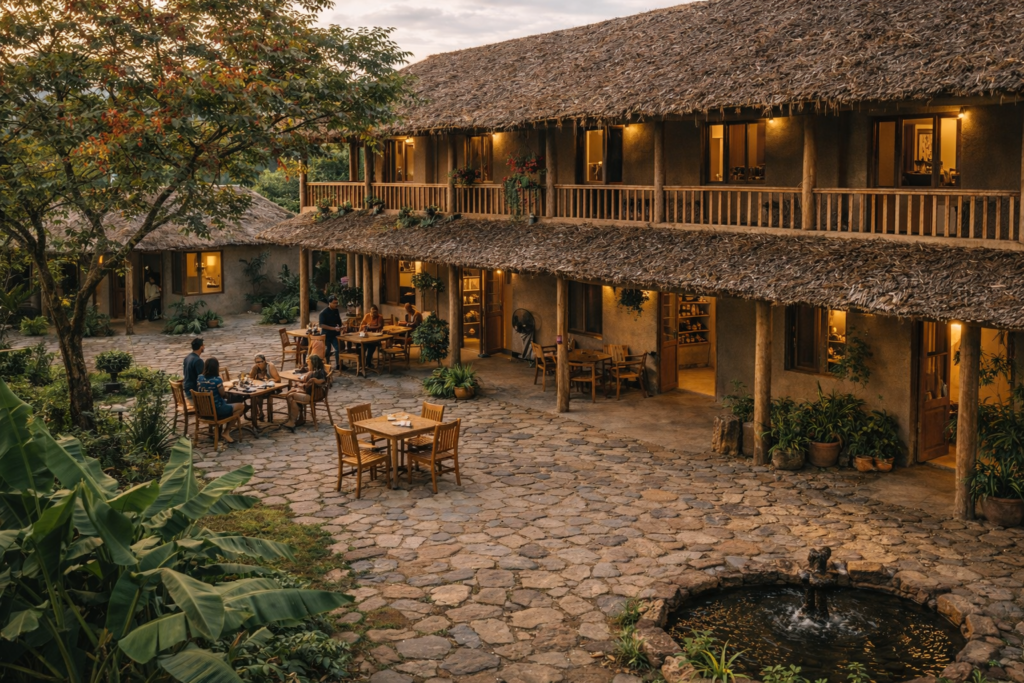
Plaza Hub — Civic & Social Core
The Plaza Hub forms the social and civic anchor of the territory.
It may include:
• Small commercial units
• Shared kitchen or café
• Flexible meeting rooms
• Guest accommodation
• Covered terraces
• Administrative reference space
The Plaza shapes daily rhythm.
It concentrates activity so residential zones remain calm.
A territory matures when it has a center.
The Plaza provides that center.
Workshop & Production Hub — Functional Economy
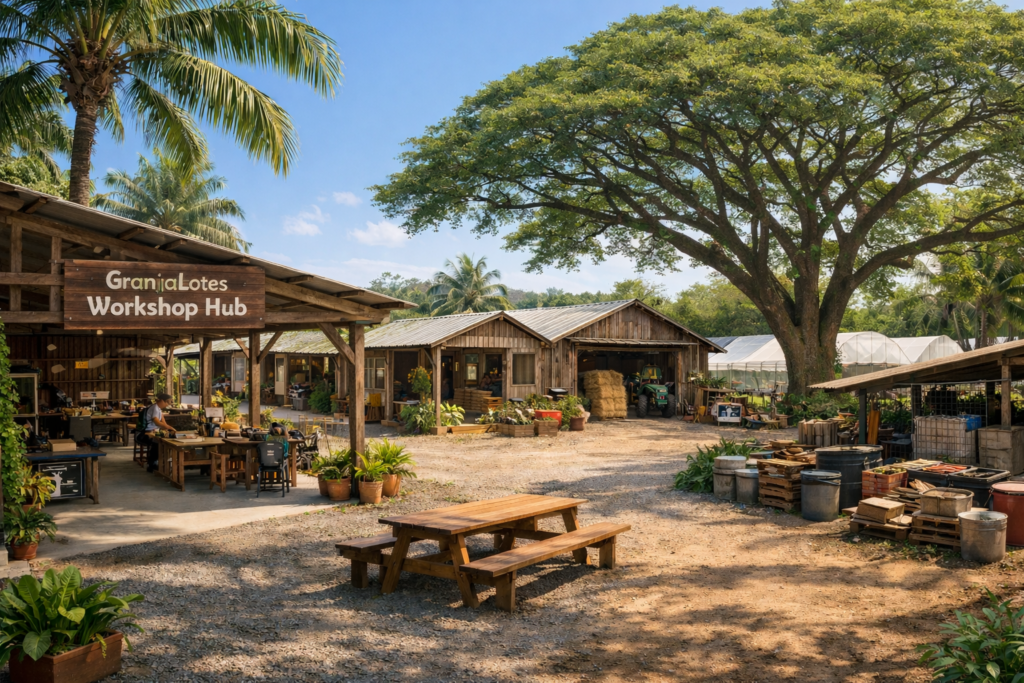
Production is concentrated — not scattered across backyards.
The Workshop Hub may include:
• Shared tool libraries
• Equipment bays
• Agricultural machinery storage
• Rentable workshop units
• Repair and fabrication space
This reduces duplication.
It protects residential quiet.
It supports internal enterprise.
Infrastructure supports productivity before aesthetics.
GOVERNANCE PHILOSOPHY
Structure Over Personality
Ownership includes an inseparable share in the common land and infrastructure.
Responsibility and benefit remain linked.
Governance operates through a permanent Shared Ownership Association (SOA).
Structural principles are protected by high voting thresholds.
Operational decisions remain flexible and practical.
Development authority exists only during the early phases and expires automatically once stabilization criteria are met.
At full maturity, each natural person holds one vote.
No individual is structurally indispensable.
The system is designed to function beyond any founder or early participant.
Structure replaces personality.
STRUCTURAL COMPLETION BEFORE EXPANSION
Development follows discipline.
Core structural elements are prioritized:
• Primary access routes
• Water retention and drainage systems
• Agricultural backbone preparation
• Utility corridors
• Lots legally and physically buildable
• Workshop minimally operational
Only after structural stability is achieved do secondary enhancements proceed:
• Plaza refinements
• Recreational embellishments
• Architectural upgrades
Durability precedes embellishment.
This sequencing prevents overextension and protects long-term coherence.
BUILDING & ARCHITECTURAL LOGIC
Building in a rural setting can feel overwhelming.
Contractors.
Climate conditions.
Material sourcing.
And the fear of making expensive mistakes.
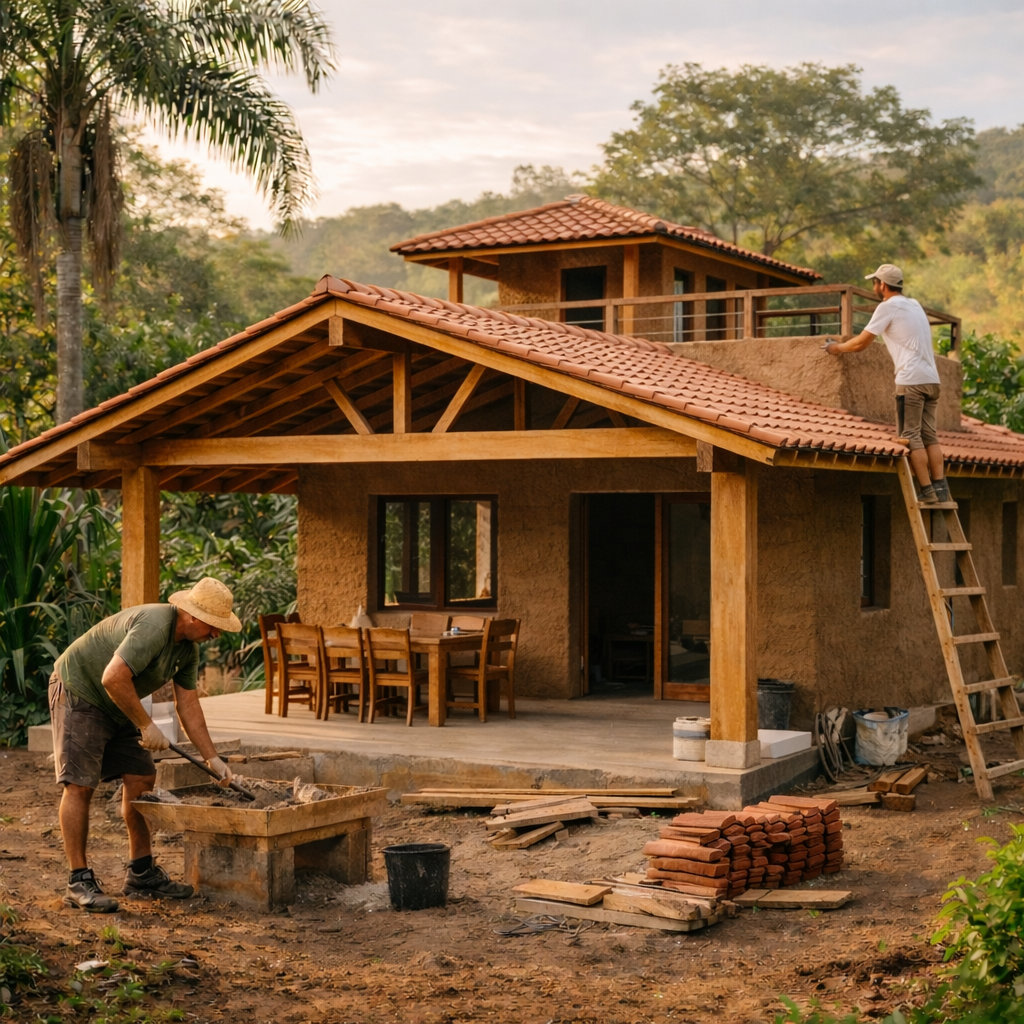
At Granjalotes, construction remains a private responsibility.
But you are not expected to figure everything out on your own.
Different building paths are possible — from simple and modest to fully developed family homes.
There is no single required model.
There is structure — but also flexibility.
Shared Knowledge & Practical Support
Building privately does not mean building in isolation.
Depending on interest and scale, the project may support:
• Skill-sharing sessions
• Practical workshops
• Collective material sourcing
• Exchange of contractor recommendations
The Workshop & Production Hub may provide:
• Modular rental workspaces
• Access to selected shared tools or equipment
• A structured environment for fabrication and preparation
Private tools remain private.
Shared equipment operates through managed systems to maintain order and safety.
Construction outcomes depend on size, materials, finish level and involvement. Granjalotes does not act as a contractor or developer.
You remain responsible — but you are not alone.
Flexible Pathways — With Structure
There is no single required way to build.
Homes at Granjalotes may range from simple and compact to fully developed family residences. The level of complexity is your choice.
Some may choose:
• A modest masonry home designed for efficiency and durability
• A self-built project with personal involvement
• Climate apropriate methods such as stabilized earth(bag) adobe, aircrete etc.
• A turnkey or modular solution from a regional provider
The decision depends on budget, time, skills and desired comfort.
To preserve long-term coexistence, basic building guidelines apply. These typically address placement within lot boundaries, height and footprint limits, environmental considerations, and construction-phase coordination.
The goal is compatibility — not aesthetic control.
You design your home.
The structure ensures it fits within the territory.
A TERRITORY DESIGNED TO MATURE
Granjalotes is not optimized for rapid expansion.
It is optimized for structural maturity.
Private ownership.
Shared continuity.
Phased development.
Normalized governance.
A rural territory designed to remain coherent long after the founding generation.